











Gallo Campground RV Guide: When Chaco’s Road Decides
Gallo accepts RVs, but road conditions control the trip: check the dated access alert, exact site, 35-foot ceiling, dry-camping systems and weather before committing.

Gallo Campground RV Guide: when Chaco’s road, not the campsite, decides
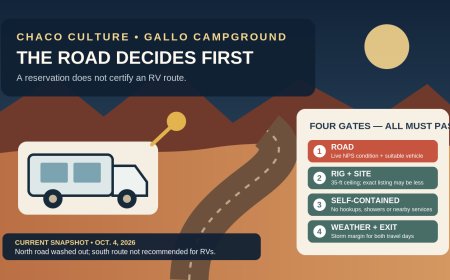
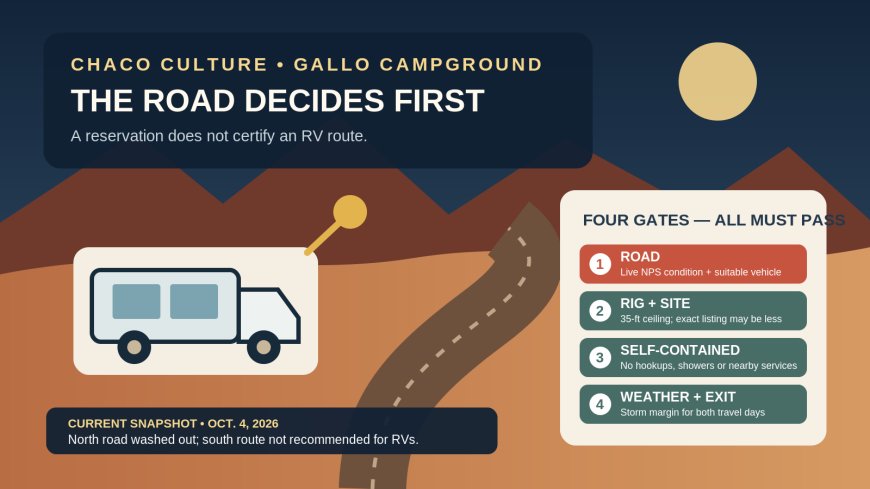
Quick answer: Gallo Campground can host RVs and trailers, but a reservable site is not proof that the road is suitable for your rig. On October 4, 2026, the National Park Service (NPS) says storm damage has made the usual north entrance inaccessible. The only open approach is the 21-mile unpaved south road, which NPS does not recommend for RVs; the current alert calls for all-wheel drive, high clearance, and experience driving in mud.[1][2] Under those dated conditions, the safer RV plan is an outside base and a suitable smaller vehicle—or postponement—not towing into Gallo.
That conclusion is about the current access route, not a permanent verdict on Gallo. When the north road reopens and the park confirms dry, passable conditions, a measured rig no longer than the park’s 35-foot RV/trailer ceiling may work. The decision still has four gates: road, exact site, dry-camping capability, and weather.
| Decision gate | Gallo boundary | Choose an outside base when… |
|---|---|---|
| Access road | Dirt-road approach required; current north route washed out | The only confirmed route is not recommended for RVs, rain or snow is possible, or the park cannot confirm conditions for your rig |
| Rig and site | Campground ceiling bars equipment longer than 35 feet; exact sites may be shorter | Your complete equipment exceeds a site record, turning/backing clearance is uncertain, or listing details conflict |
| Services | No hookups or showers; water, flush toilets and dump station are listed | You require shore power, dependable communications, nearby fuel/repair/food, or cannot operate self-contained |
| Weather | Exposed, treeless campground at 6,200 feet; flash flood, lightning, heat and hard-freeze risks | A storm overlaps arrival/departure, you lack a retreat day, or cold/heat exceeds your system’s capability |
| Booking | Three-month booking window; unreserved sites may become first-come | A reservation would tempt you to drive a deteriorated road rather than abandon the stay |
The October 4, 2026 access decision
NPS posted a road alert on October 3: CR 7950, the normal approach from US 550, was washed out at Escavada Wash and could not be used to enter the park. The park identified Highway 57 from the south as the sole access point and described mud, standing water, exposed rocks, and a need for AWD, clearance, and mud-driving experience.[1]
The directions page supplies the RV-specific boundary. NPS applies two warnings to the southern choices: surface quality may deteriorate all the way to impassable, and RV use is discouraged. The Highway 57 segment leaves pavement for 21 miles. Maintenance is infrequent, NPS notes, and foul weather can eliminate access.[2]
Put those statements together conservatively. A motorhome or trailer reservation does not override the road warning. AWD on a tow vehicle does not create ground clearance beneath stabilizer hardware, protect a trailer from rocks and ruts, or guarantee room to turn around. A forecast of clearing weather is not the same as a park report that the road has dried. The current alert does not close Gallo to every traveler, but it sets a high bar that ordinary RV combinations should not be assumed to meet.
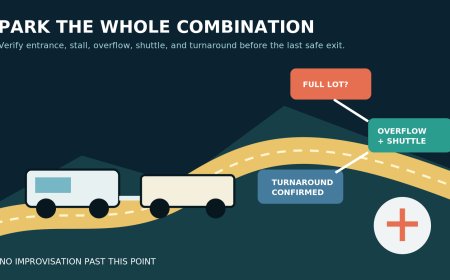
For an RV trip on or near the article date, use this stop rule: do not start down Highway 57 with the RV unless the park has directly confirmed conditions appropriate for the exact vehicle and the driver can satisfy every stated capability. The published phone is 505-786-7014.[1][2] If the answer is uncertain, leave the RV at a lawful outside campground or other booked base and enter only in a vehicle that meets the current advisory—or reschedule.
What changes after the north road reopens
The north route is usually the more plausible RV approach, but “more plausible” should not be shortened to “RV-safe.” From US 550, the official route uses CR 7900 and CR 7950. NPS describes 8 paved miles followed by 13 miles of rough dirt, with the final 4.5 miles especially rough.[2] Recreation.gov warns that wet access roads can trap vehicles in mud or send them sliding from the road, and that phone and towing service may be difficult.[4]
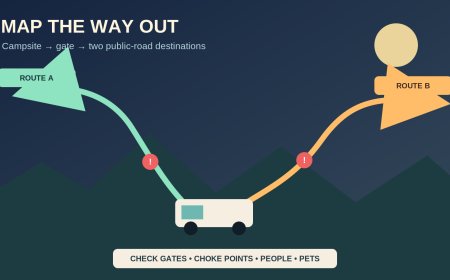
After repairs, passability will still change with grading and weather. Check the NPS conditions page, use the park’s written directions instead of an automatic GPS shortcut, call the park close to departure, and keep an outside-base reservation cancellable. “Open” means traffic is allowed; it does not certify suitability for every wheelbase, overhang, tire, hitch, or driver.
The 35-foot rule is only the first fit test
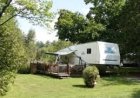
The campground’s official ceiling excludes a trailer or motorhome longer than 35 feet. NPS identifies sites 12 through 16 as RV-only and prohibits tents in those five sites.[3] Recreation.gov also tells campers to inspect the limited parking dimensions on the individual campsite record.[4]
Treat 35 feet as an upper boundary, not a promise. A smaller mixed-use site may have a shorter driveway. A trailer listing may cap the trailer itself and then describe how the tow vehicle must fit. Record these numbers before booking:
- motorhome length, including permanently mounted equipment;
- trailer or fifth-wheel length;
- tow-vehicle length and total connected combination;
- height, rear overhang, wheelbase and low components;
- space needed for slides, steps and safe entry—without extending beyond the designated area.
There is also a live-data conflict worth noticing. The Recreation.gov record for RV-only site 14 lists a 42-foot driveway and permits an RV up to 40 feet, while the NPS campground page says rigs over 35 feet cannot be accommodated.[3][6] Follow the more restrictive park-wide limit unless NPS corrects or expressly resolves the discrepancy for your reservation. A site field that says “40 ft” does not prove a 40-foot motorhome may use the access road or the park.
The same caution applies to counts. NPS reports 26 individual sites and two group sites after permanently closing sites 20, 21, 23, 24 and 25 for rockfall risk. Recreation.gov’s general description still refers to 32 individual sites.[3][4] That mismatch is a reason to trust the current booking inventory and closure notice, not to calculate availability from an overview paragraph.
Gallo is dry camping with a few essential facilities
Gallo has no electric, water or sewer hookups and no showers. NPS lists water, flush toilets and an RV dump station; each individual site has a table and fire grate. There is no gasoline, food, ice or auto repair in the park, and no firewood is sold there.[3] Recreation.gov characterizes mobile service as unavailable and emphasizes the remoteness.[4]
Generator use is limited to three two-hour periods: early morning (8 to 10), midday (12 to 2), and early evening (5 to 7).[3] Plan battery capacity around those periods rather than assuming a generator can recover a bank at any time. Arrive with the fuel required to exit, food for a delay, drinking-water reserve even though campground water is listed, and a waste plan that does not depend on a single facility remaining operational.
The campground is exposed: NPS says there is no shade.[3] An awning is not a dependable substitute in gusts or thunderstorms. Bring a separate shade strategy that can be put away quickly, and do not plan to collect local wood; gathering is prohibited.
Reservations should preserve the option to turn around
NPS says Gallo reservations open three months before the stay. Individual sites cost $20 per night, with the stated Senior and Access pass discount, and stays are limited to 14 consecutive nights and 30 nights in a calendar year. If a camper has not arrived by the second day, the remainder may be forfeited and released first-come, first-served. Unreserved sites can be assigned on arrival through the visitor center.[3]
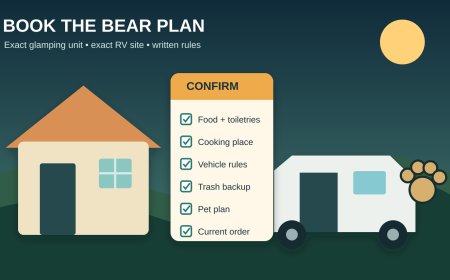
Those rules matter, but road conditions outrank sunk cost. Do not drive an unsuitable route because the cancellation deadline passed or because a site appears available. Before paying, confirm the equipment type and dimensions on the exact listing, read the “Need to Know” field, and save a screenshot or PDF of the site record. Recheck alerts before the cancellation cutoff, again before leaving pavement, and after any rain in the basin.
Gallo is described as open year-round except for six holiday-related nights: the night before and the night of Thanksgiving, December 24–25, December 31, and January 1.[3] Year-round operation does not mean year-round road reliability.
Weather can remove the exit as quickly as the entrance
Chaco sits at roughly 6,200 feet. NPS says summer highs commonly reach the 80s to mid-90s Fahrenheit, while thunderstorms can bring intense local rain, lightning, rapid cooling and flash floods. In winter, overnight readings are commonly subfreezing and can drop to the teens Fahrenheit or colder.[5]
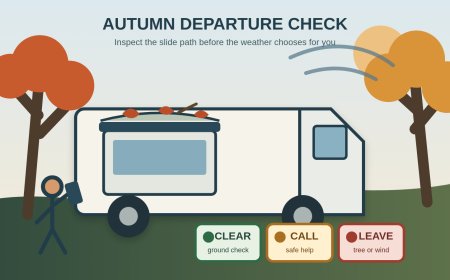
For RV planning, precipitation is the pivotal risk because it affects both camp and access. Gallo lies among washes, and the NPS weather page illustrates flooding in the campground after a storm.[5] Rain at camp can also leave the dirt road unusable at departure. Build a weather margin on both sides of the reservation:
- check the forecast for the park and the broader drainage area, not just a nearby town;
- avoid arriving near or after dark, when ruts and standing water are harder to judge;
- carry enough supplies to wait rather than force an exit;
- winterize exposed plumbing for the forecast low, not the afternoon high;
- leave before a storm if the park advises doing so.
A rigid next-day appointment is a poor match for a road that can become impassable. The more consequential the deadline—flight, medical visit, work shift—the stronger the case for sleeping outside the canyon.
When an outside base is the safer choice
Use an outside base when any one of these applies:
- the south road is the only entrance and the NPS RV warning remains in effect;
- recent or forecast rain or snow could overlap either travel day;
- the rig exceeds 35 feet, or the exact site cannot fit the complete setup;
- low clearance, long rear overhang, street-oriented tires or limited rough-road experience reduce the margin;
- a traveler depends on reliable cell service, shore power, refrigeration, medical equipment, nearby supplies or prompt roadside assistance;
- the itinerary cannot absorb a road closure or delayed departure.
An outside base does not make the final drive automatically safe. The current October 3 alert still calls for AWD, high clearance and mud-driving experience on the only open road.[1] If the available day vehicle does not meet that description, postpone the Chaco visit. “Drive in from outside” is an option only when both the road and vehicle checks pass.
Gallo is the right choice when the road has been confirmed suitable, the exact site fits with margin, the RV can dry-camp without communications or nearby services, and the schedule can flex around weather. That is a narrower answer than “RVs are allowed,” but it is the answer that protects the rig and the exit.
Sources
- Alerts & Conditions — Chaco Culture National Historical Park — Current road alert, campground closures and operating notes; alert and page updated October 3, 2026; checked October 4, 2026.
- Directions — Chaco Culture National Historical Park — Official routes, unpaved mileage, RV warning and road-condition phone; updated October 3, 2026.
- Camping — Chaco Culture National Historical Park — Site inventory, 35-foot limit, facilities, generator hours, fees, booking window and closures; page last updated June 2, 2025; checked October 4, 2026.
- Gallo Campground — Recreation.gov — Current facility alert, exact-site booking inventory, remoteness warning and facility description; checked October 4, 2026.
- Weather — Chaco Culture National Historical Park — Elevation, seasonal temperatures, thunderstorms, flash floods and winter cold; page last updated February 5, 2024.
- Site 014 — Gallo Campground, Recreation.gov — Site-specific equipment and driveway fields used to document the conflict with the park-wide 35-foot limit; checked October 4, 2026.
What's Your Reaction?