









Hot soup for an RV day trip: preheat the container, then watch 140°F
Pack soup, chili, or stew for an RV day trip with a clean preheated insulated container, a 140°F holding target, a thermometer, and a discard clock.

Hot soup for an RV day trip: preheat the container, then watch 140°F
An insulated container holds heat; it does not cook food or supply a guaranteed number of safe hours.
The container starts hot and clean
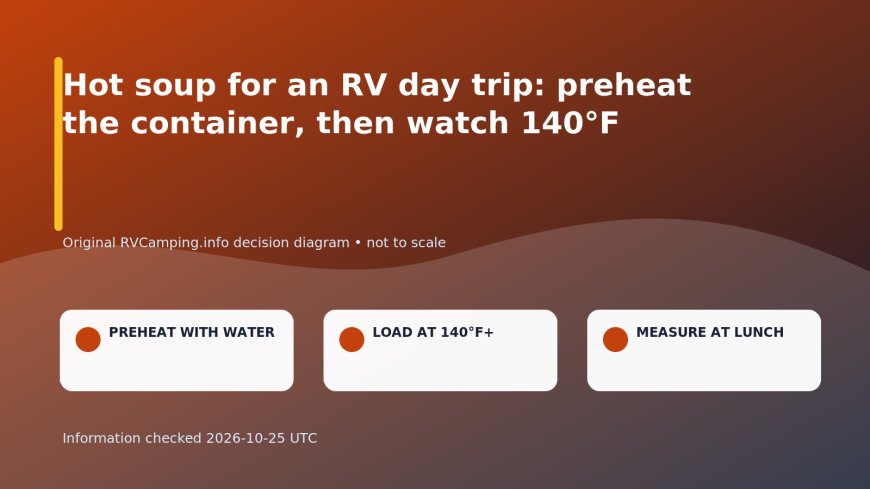
USDA’s method for soup, chili and stew begins by filling the insulated container with boiling water, letting it stand for a few minutes, emptying it and immediately adding piping-hot food.[1] The step preheats the container; it is not a substitute for washing it.
Handle the boiling water carefully and follow the exact container’s care instructions. USDA does not give a universal preheat time beyond a few minutes, so do not invent one or assume every lid and gasket tolerates the same treatment.
Load a holding container, not a cooker
USDA and FDA use 140°F as the consumer hot-holding floor in this context.[1][2] Check the fully cooked food immediately before filling. The jar is supposed to preserve heat, not finish cooking lukewarm chili.
Seal the lid promptly and keep it closed until the meal stop.[1] Repeated openings release heat. The federal guidance does not promise how many hours an unnamed container will keep food at 140°F.
A thermometer decides lunch
At the planned stop, measure the food rather than judging steam or touch. A reading of at least 140°F still meets the cited target for hot holding.[1][2] A repeat route can be tested with the actual container, portion and weather instead of relying on marketing language.
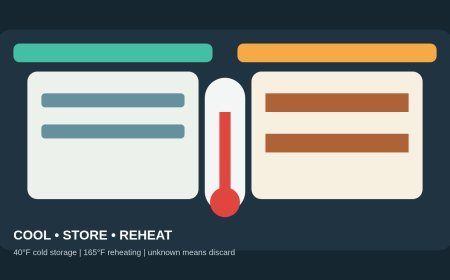
If the food is below 140°F, FDA’s consumer danger-zone clock applies: no more than two hours between 40°F and 140°F, reduced to one hour when outdoor temperature is above 90°F.[2] If the crossing time is unknown, discard rather than reconstructing it from a warm lid.
Clean up before the next route
USDA says packed-lunch equipment should be clean before use and cleaned thoroughly afterward; FoodSafety.gov calls for hot, soapy water on reusable dishes and utensils.[3][4] Follow the product maker for removable seals and drying.
This route is separate from reheating leftovers. It begins with fully cooked, genuinely hot food, then asks whether one closed container can maintain the holding target until a known meal stop. Preheat, fill, close, measure, then apply the clock.
Source credit: RVCamping.info reviewed the linked primary and supporting materials on 2026-10-25. The decision sequence and recommendations are original editorial analysis.
Sources
- USDA Keeping Bag Lunches Safe — Accessed 2026-10-25.
- FDA handling food outdoors — Accessed 2026-10-25.
- USDA packed-lunch cleaning guidance — Accessed 2026-10-25.
- FoodSafety.gov four steps — Accessed 2026-10-25.
What's Your Reaction?