




























Marine Biologists Strap A Camera To A Sea Turtle And Learn Some Surprising Things
Marine biologists are constantly trying to uncover more secrets about the ocean and the marine life that calls it home. With the continuous emergence of technology, learning more about this vast underwater world is becoming easier. Recently, scientists deployed a camera onto the back of a sea turtle to learn more about their habits and [...] The post Marine Biologists Strap A Camera To A Sea Turtle And Learn Some Surprising Things appeared first on Outdoors with Bear Grylls.

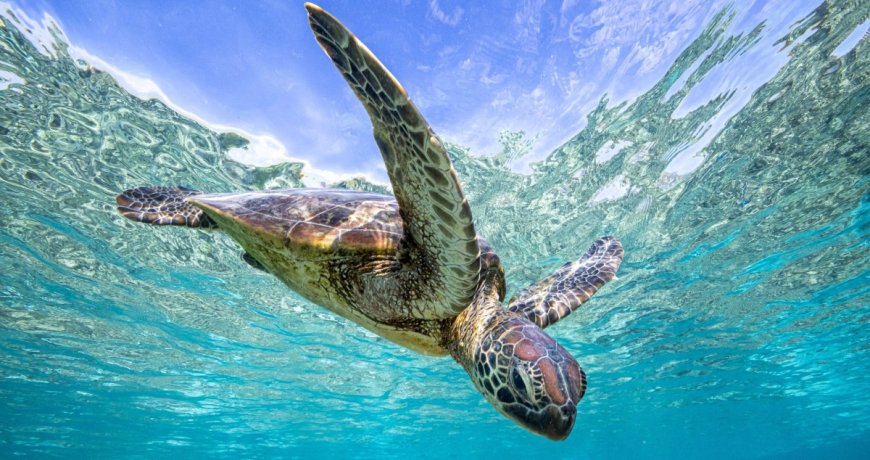
Marine biologists are constantly trying to uncover more secrets about the ocean and the marine life that calls it home. With the continuous emergence of technology, learning more about this vast underwater world is becoming easier. Recently, scientists deployed a camera onto the back of a sea turtle to learn more about their habits and life. During the process, they uncovered some surprising truths.
Introducing The TurtleCam
Discover Wildlife shared some of the exciting insights from the TurtleCam. When speaking with the outlet, marine biologist Nathan J. Robinson shared the main purpose of attaching these animal-borne cameras. “Our goal with the TurtleCam project,” he shared, ” was to show from a first-person perspective how sea turtles swim through the oceans.”
The cameras have little to no effect on the sea turtle or their day-to-day interactions. The camera is attached to the sea turtle’s shell “using a release mechanism that is corroded by the sea water in just a few hours.” Therefore, after the hours are used up, the camera detaches from the individual, no worse for wear.
Camera Attached To Sea Turtle Revealed Some Surprising Things
So what did the marine biologists learn from their TurtleCam? As it turns out, they learned a few surprising facts. First, Robinson shared that they learned that turtles “might not fully fill their lungs when diving in shallower waters.” Scientists believe this is an attempt to help them stay neutrally buoyant.
This information is incredibly important as it could help save the lives of turtles that are caught in fishing nets. The authors of the paper share that “turtles caught in shallow waters may have lower oxygen reserves and thus could drown faster than those caught in deeper waters.” With this knowledge, fishermen hunting in shallower waters could take extra precautions to ensure the safety of the sea turtles.
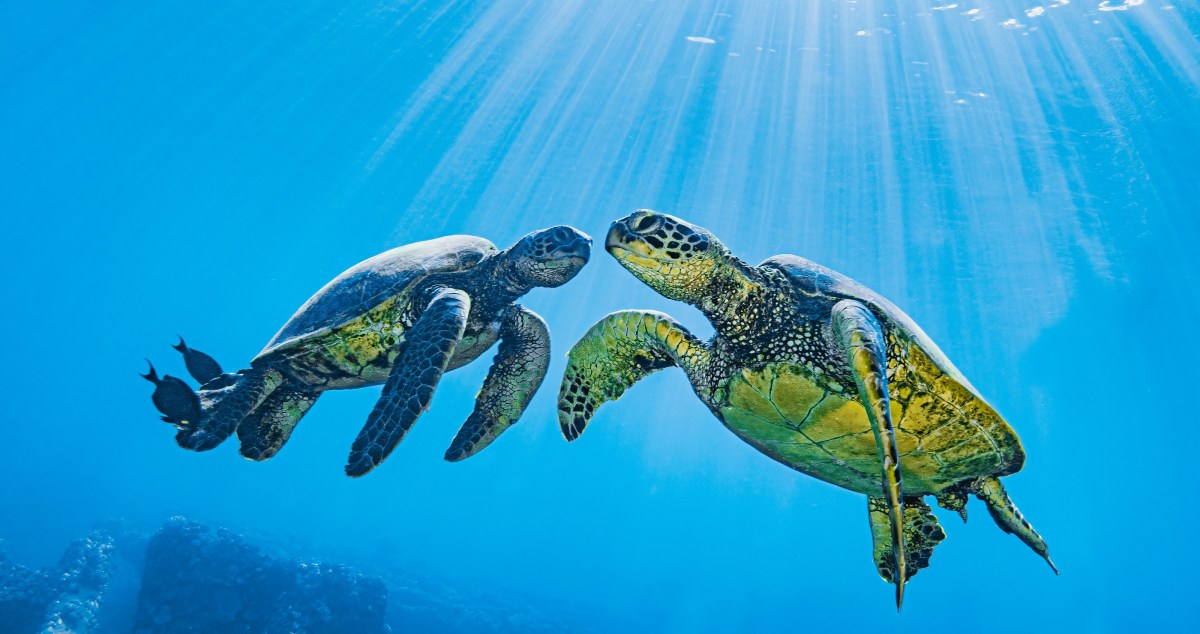
Additionally, the marine biologists learned that sea turtles are incredibly social. As the camera was on the sea turtle’s back, scientists noticed that ” A turtle will rarely swim past another turtle without interacting in some way.” While they may not know the exact reason, implications, or benefits of such a choice, it is incredibly fascinating (not to mention adorable) to watch.
These animal-borne cameras are a great method at harmlessly learning more about our ocean and the stunning creatures that call it home.
The post Marine Biologists Strap A Camera To A Sea Turtle And Learn Some Surprising Things appeared first on Outdoors with Bear Grylls.
What's Your Reaction?